Comparing CRM Capabilities in EduAdmin and Dante
When comparing EduAdmin vs Dante, CRM functionality is a key differentiator. Both platforms allow you to store information about customers and participants, but they differ greatly in how customer and participant data can be used.
Dante's approach to CRM
Though not designed with a full scale CRM at its core, Dante does include basic functionality for managing contacts, bookings, course participants, and also a pipeline to visualise deal-related information. This is typically sufficient for organisations that primarily need to track registrations and manage course attendance.
EduAdmin's CRM and Lifecycle Management
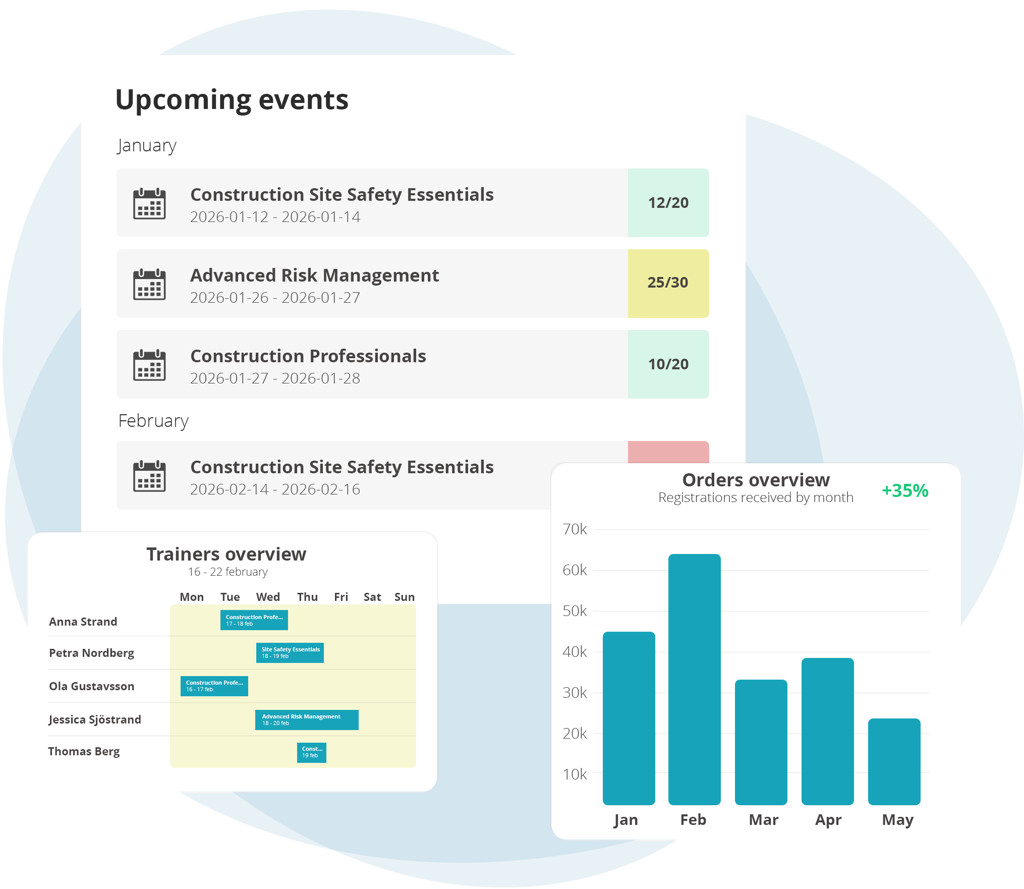
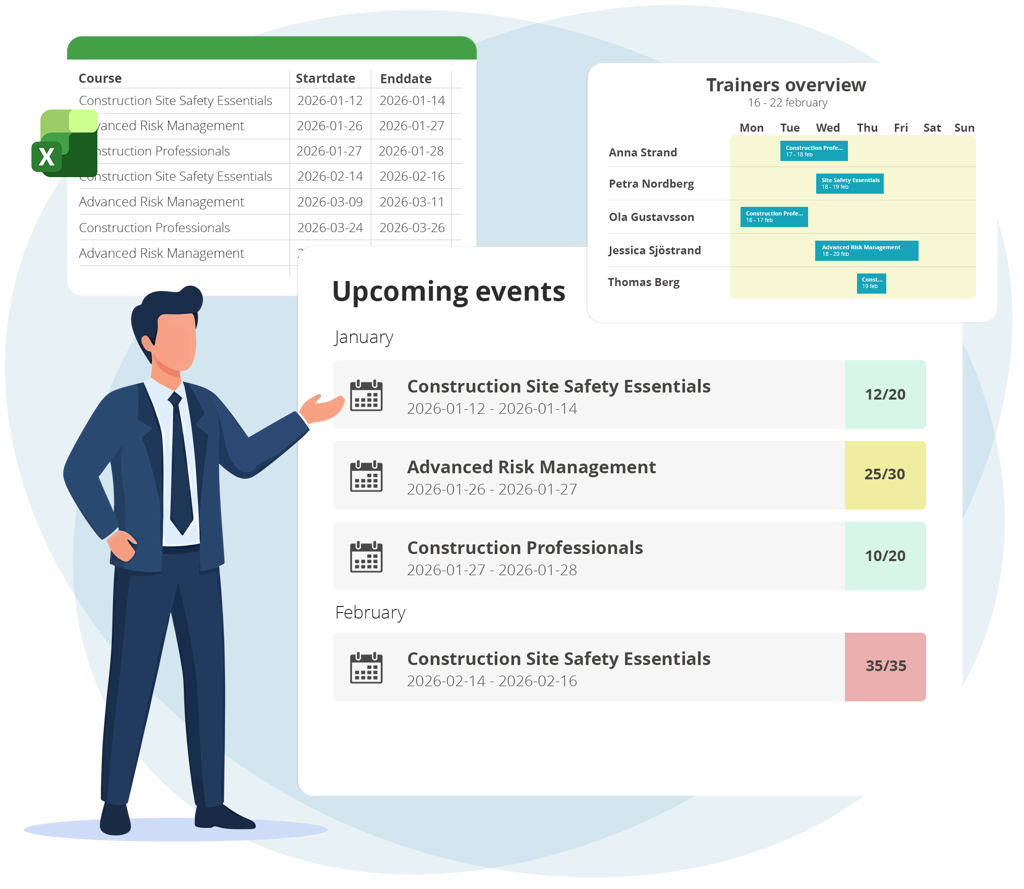
EduAdmin built-in CRM functionality allows you to do more than just managing customer relationships and course sales, it connects CRM data across the entire training lifecycle - from registration and scheduling to delivery, certification, and follow-up.
The platform builds detailed profiles for both external participants and internal learners, capturing:
- Training history
- Competencies
- Compliance requirements
Features such as automated waitlists, group bookings, and certification tracking allow organisations to manage complex training programmes at scale.
This makes EduAdmin particularly strong for organisations delivering ILT and vILT, where participant tracking, scheduling, and resource coordination are tightly interconnected.
By tracking mandatory compliance deadlines, EduAdmin also makes it easier to, for instance, keep track of UK GDPR training or CPD requirements outlined by the Information Commissioner's Office (ICO).
Administrators can view exactly which modules a participant has completed, when their qualifications expire, and what resources they need for upcoming sessions.
For UK professionals maintaining standards set by the Chartered Institute of Personnel and Development (CIPD), you get a clear, operational view of your entire training schedule within one unified system without the need for external systems or CRM-integrations..